Grateful Dead Symbols Decoded: Skulls, Roses and Bears
Picture a Grateful Dead poster from 1966: a grinning skull crowned with a garland of roses, beauty and decay sharing the same square inch of paper. Why has that image — and the bears, bolts and turtles that followed — captivated Deadheads from San Francisco to Soho for over half a century? Here at gratefuldead-music.com, we’ve spent years tracing where these emblems came from, what they meant to the band, and how they ended up on tie-dyes in Camden Market and vinyl sleeves in Rough Trade. This is our decoded guide to the symbols of the Grateful Dead.
The Skull and Roses: A Symbol of Life, Death and the Dead
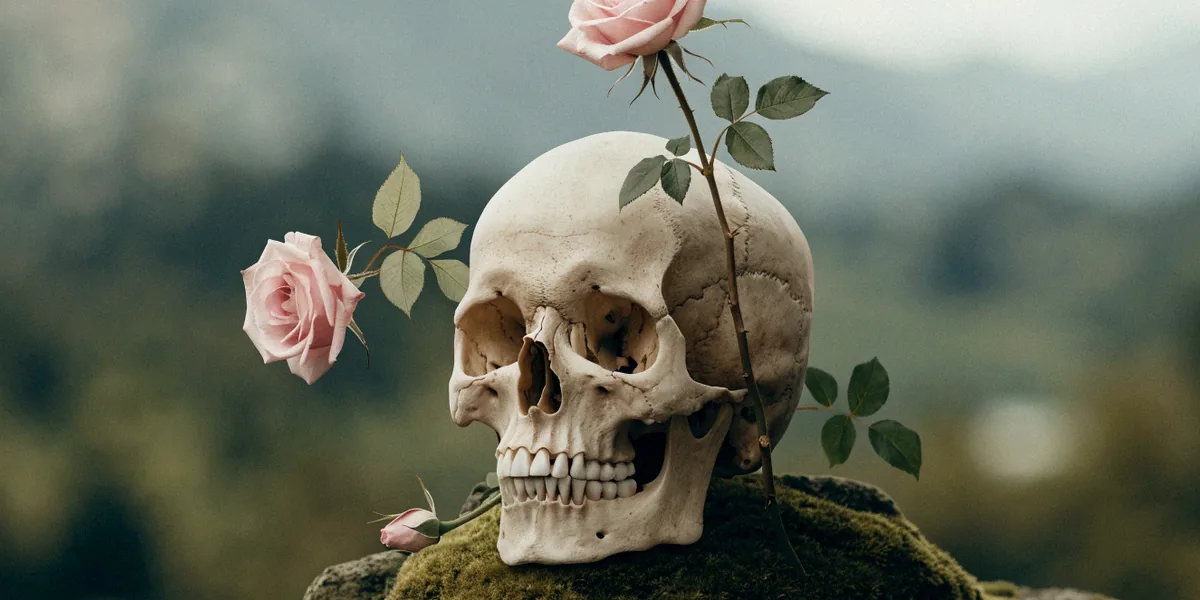
The skull and roses motif is the Dead’s founding visual paradox: mortality wrapped in bloom. It’s a reminder that the band’s music lives somewhere between the graveyard and the garden, and it remains the single most recognisable image in the Deadhead universe.
Origins in 1960s San Francisco Poster Art
The motif first took hold in 1966, when poster artists Stanley Mouse and Alton Kelley created a striking image for a Grateful Dead show. Drawing on a nineteenth-century illustration from the Rubáiyát of Omar Khayyám, they paired a skull with a crown of roses — a design that captured the Haight-Ashbury scene’s mix of the macabre and the psychedelic. The poster became a defining piece of San Francisco rock art, and the band embraced the image as their own.
The 1971 Skull & Roses Album and Its Legacy
The motif graduated to the record racks in 1971 with a double live album officially titled Grateful Dead — but universally known as Skull & Roses. That album, drawn from performances at the Fillmore East and Winterland, is one of the great documents of the band’s live peak, and its cover cemented the skull-and-roses as the Dead’s signature. For many collectors, spotting an original pressing is the first thrill of building a Dead vinyl shelf.
What the Skull and Roses Mean to Deadheads
For Deadheads, the image isn’t morbid — it’s celebratory. It says that death and beauty, loss and joy, are part of the same song. We’ve seen it stitched onto denim jackets, etched into guitar pedals and tattooed on forearms at fan meetups across the UK. It’s the closest thing the Dead have to a family crest.
Dancing Bears: The Grateful Dead’s Playful Mascots
If the skull and roses are the Dead’s solemn side, the dancing bears are their grin. A row of marchers in flat caps and shorts, mid-stride and mid-groove, they’ve become shorthand for the band’s whimsical, communal spirit.
Owsley ‘Bear’ Stanley and the Soundboard Legacy
The bears owe their name and inspiration to Owsley ‘Bear’ Stanley, the band’s legendary sound engineer and a pioneering figure in live audio. Bear built and refined the Dead’s touring sound systems and recorded countless shows, and his nickname gave the marching bears their identity. The design itself appeared on the back cover of the 1973 live album History of the Grateful Dead, Volume One (Bear’s Choice), a record assembled as a tribute to him.
From Album Art to Merchandise and Tattoos
From that back cover, the bears escaped into the wild. Today you’ll find them on:
- Tie-dyed t-shirts and hoodies sold at festivals and online
- Bumper stickers, patches and pin badges
- Coffee mugs, tote bags and guitar straps
- Tattoos — often a line of bears marching around a wrist or calf
Their appeal is simple: they look like they’re having the best night of their lives, which is exactly how a great Dead show feels.
Why the Bears Resonate with UK Fans
British Deadheads have adopted the bears with particular affection. At UK Deadhead meetups you’ll spot the marching line on everything from enamel pins to festival flags, and they’ve become a friendly signal — if you see the bears, you’ve found your people.
Steal Your Face: The Lightning Bolt Skull
No image says “Grateful Dead” faster than the lightning bolt skull. Officially nicknamed Steal Your Face, it’s the badge every Deadhead eventually wears.
Design Origins and the 1969 Debut
The Steal Your Face logo was created by Owsley Stanley and artist Bob Thomas in 1969, and it first appeared on the band’s equipment that same year — painted onto amps and speaker cabinets as a practical way to mark their gear. The design is a circle split by a thirteen-point lightning bolt, with the top half forming a skull and the bottom half its reflection. It’s simple, stark and instantly readable from across a field.
The 1976 Album and Live Show Iconography
The logo took its name from the 1976 live album Steal Your Face, which compiled performances from the band’s October 1974 Winterland run. Since then it has been projected behind the band, printed on tickets, sprayed onto vans and rendered in neon. If the skull and roses are the Dead’s crest, the bolt is their flag.
How UK Deadheads Wear the Bolt
In the UK, the bolt turns up on enamel pins traded at fan meetups, on screen-printed tees in Camden Market, and on the rear windows of cars from Brighton to Glasgow. Wearing it is a quiet declaration: you know the music, and you know what it means.
Roses, Skeletons and Other Recurring Motifs
Beyond the big three, the Dead’s visual language is full of recurring characters — skeletons, turtles, eyes and bolts — each tied to a specific record or song.
The American Beauty Skeleton and Roses
The 1970 album American Beauty gave us one of the band’s warmest covers: a skeleton and a rose rendered in red and gold, framed like a folk-art medallion. It matches the record’s acoustic, rootsy sound — this is the album that gave us “Ripple” and “Box of Rain” — and it reinforced the skull-and-roses theme with a gentler touch.
Terrapin Station and the Turtle Symbol
Terrapin Station, the 1977 Grateful Dead album featuring the side-long “Terrapin Part 1”, brought the turtle into the family. The terrapin — a creature that carries its home on its back — became a symbol of the long, patient journey of a Deadhead’s life, and it’s a favourite motif on patches and posters to this day.
Lightning Bolts, Eyes and Cosmic Imagery
Other motifs recur throughout the catalogue and merchandise:
- The thirteen-point lightning bolt, echoing the Steal Your Face design
- The all-seeing eye, drawn from psychedelic poster traditions
- Cosmic and celestial imagery tied to the band’s space-jam explorations
- Uncle Sam and Americana figures from the Grateful Dead (1967) debut sleeve
You’ll find these on reissue sleeves in Rough Trade shops and on bootleg artwork traded between collectors — a whole visual dialect built up over decades.
How to Spot Dead Symbols in the Wild (and in the UK)
Once you know the vocabulary, you start seeing it everywhere. Here’s how to read the signs.
Vinyl Sleeves and Reissue Art
Start with the records. Skull & Roses, American Beauty, Bear’s Choice, Steal Your Face and Terrapin Station each carry a distinct emblem. Reissues often reproduce the original art faithfully, so a quick glance at the spine or corner can tell you which era you’re holding. UK Deadheads often gather at Rough Trade shops to hunt for rare vinyl and compare pressings.
Merchandise and Bootleg Culture
T-shirts, patches, stickers and bootleg cassettes have carried these symbols far beyond official releases. Bootleg culture in particular kept the imagery alive between tours, with fans hand-drawing bears and bolts onto tape inserts. If you’re browsing a market stall and see a hand-printed bolt on a worn tee, you’re looking at living Deadhead history.
UK Deadhead Gatherings and Landmarks
In the UK, Deadheads often gather at Camden Market, where tie-dyes, patches and vintage vinyl stalls cluster together, and at Rough Trade shops for rare vinyl finds. The annual Grateful Dead UK Fan Meetup brings together collectors, traders and tape enthusiasts for a day of music and merchandise. Keep an eye out for the bears on a flag or the bolt on a pin — that’s your invitation to say hello.
FAQ
What is the most famous Grateful Dead symbol?
The Steal Your Face lightning bolt skull is probably the most widely recognised, but the skull and roses runs it close. Both appear on album covers, merchandise and tattoos worldwide.
Who designed the dancing bears?
The bears were inspired by Owsley ‘Bear’ Stanley, the band’s sound engineer, and appeared on the back cover of the 1973 live album History of the Grateful Dead, Volume One (Bear’s Choice).
Why is the 1971 live album called Skull & Roses?
Its official title is simply Grateful Dead, but fans nicknamed it Skull & Roses after the Mouse and Kelley artwork on the cover. The name stuck.
Where can UK Deadheads find rare Dead vinyl?
Camden Market and Rough Trade shops are the classic starting points, along with the annual Grateful Dead UK Fan Meetup where collectors trade pressings and bootlegs.
What does the terrapin turtle represent?
The terrapin, from the 1977 album Terrapin Station, symbolises the long journey — a creature carrying its home wherever it goes, much like a touring Deadhead.
These symbols are more than decoration. They’re a shared language — a skull and roses on a poster, a bear on a t-shirt, a bolt on a pin — that lets Deadheads recognise each other from San Francisco to Soho. We’d love to hear where you’ve spotted them: share your sightings and your own interpretations with us, and keep the conversation going.